Why Your Shopify Store Needs Custom 2.0 Development(Not Another App)
If your put in feels slow, looks like every other dropshipping site, and you’re profitable for a dozen apps just to get staple features workings the problem usually isn’t your products. It’s your topic computer architecture.
The Real Cost of”App Stack” Stores
Most Shopify stores lean on third-party apps for everything: cart drawers, size charts, upsells, swatch pickers. Each app adds its own JavaScript file, and most of it scads whether a shopper needs it or not. The leave is foreseeable stores that take 4-5 seconds to load, feel slow on Mobile, and quietly leak conversions before a visitant even sees the production.
There’s a second, subtler cost too: monotony. When every lay in runs the same three or four popular themes with the same app widgets latched on, nothing about the shopfront signals that this stigmatise is different or fiducial. Generic plan erodes the trust that turns a web browser into a vendee.
A Different Approach: Native Liquid 2.0 Architecture
Custom Shopify 2.0 development solves both problems at the seed.
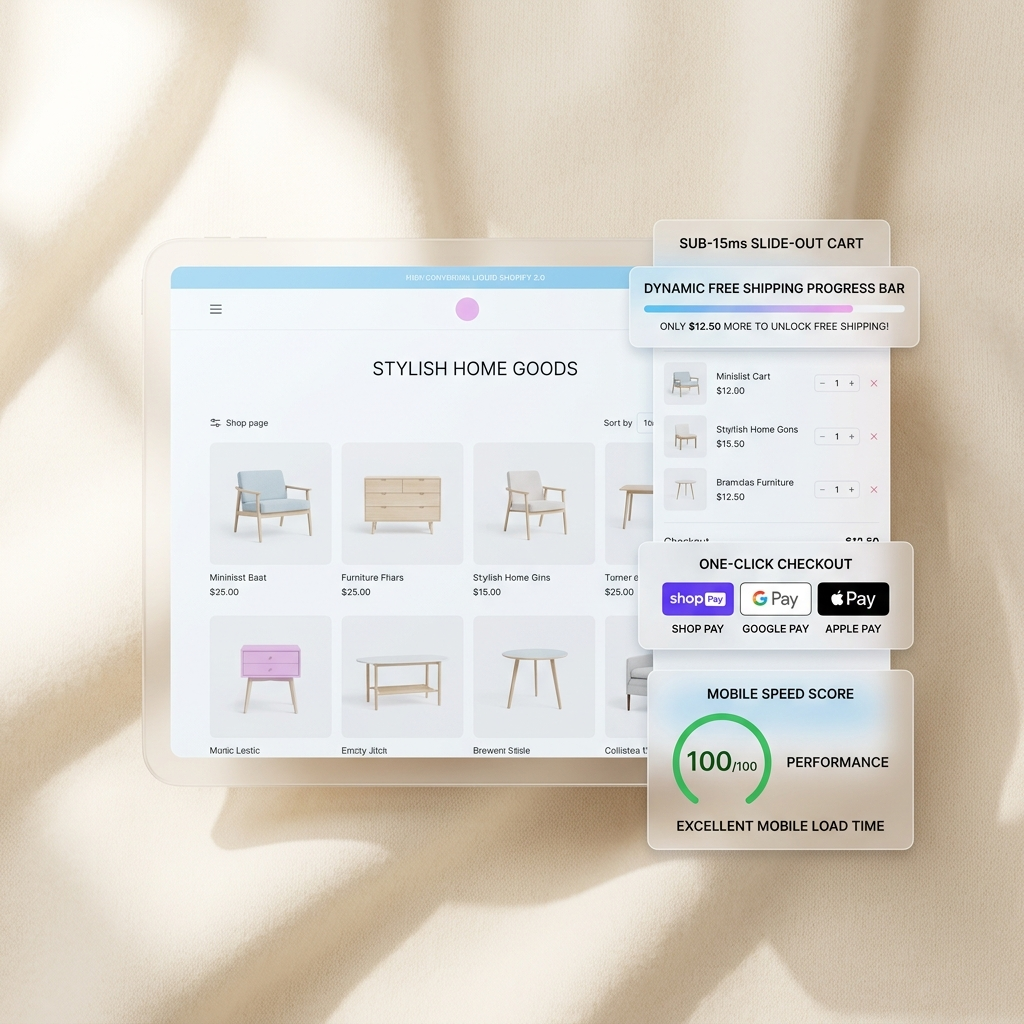
Instead of stacking apps, features like slither-out cart underdrawers, layer free-shipping get on bars, in-cart upsells, size charts, and production tabs get hard-coded direct into native Liquid. No yield-blocking scripts, no every month subscriptions for what should be basic functionality, and dramatically faster load times the kind that gets a stack away into the 90-100 PageSpeed straddle instead of the 50s and 60s.
On the design side, this also means the storefront can actually look like the stigmatise it belongs to. Bespoke product bundles, synergistic swatch pickers, and a spacial UI stacked around how the products are actually sold not a generic template flexile to fit.
What This Actually Looks Like in Practice
A well-built usage Shopify 2.0 subject typically includes:
- Instant Ajax cart boxers no full-page reloads, with shapely-in upsell and transport-progress logic
- Modular section architecture merchants and marketing teams can still rearrange pages in the Theme Editor without touching code
- Mobile-first performance AVIF visualise format, critical CSS inlining, zero block scripts
- Dynamic production options swatch pickers, multi-pack amount tiers, and live damage updates built natively
The world-shaking here is the third one: custom doesn’t mean bolted-in. Native Liquid 2.0 sections still give the store proprietor’s team full drag-and-drop control in the Theme Editor. The code is custom; the day-to-day redaction isn’t.
Why Speed and Design Aren’t Separate Conversations
It’s tantalising to regale”make it fast” and”make it look good” as two different projects. In practice, they’re the same imag. A cart that opens outright and a swatch selector that updates price live aren’t just public presentation wins they’re bank signals. Shoppers register friction even when they can’t name it, and a hive away that responds instantly simply feels more credible than one that stutters.
What a Store Owner Walks Away With
A specific usance build isn’t just a live topic it’s a package: the production-ready subject file, a full Figma UI kit for future design work, a preparation video so the internal team isn’t dependant on a developer for every modest change, and full commercial message ownership of the code. No IP left behind with the delegacy.
The Bottom Line
Apps are useful for a lot of things. They’re not a fill in for a shopfront built to actually perform fast by default, different by plan, and editable without a on retainer. For Shopify Liquid development s that depend on conversion rate rather than dealings volume alone, that remainder shows up direct in tax income.
Typical turnaround: 2-3 weeks Target bench mark: 99 PageSpeed Score Reported impact: up to 44 conversion rate